Key Qualities to Compare in Realtors When Selling

The qualities to compare in realtors are the clearest predictors of how fast your home sells and how much you net at closing. Choosing the right agent, what the industry calls agent selection, is not about finding someone you like. It’s about finding someone whose measurable performance matches your goals. The wrong choice costs you time, money, and stress. The right one does the opposite. This guide breaks down the most important realtor attributes so you can evaluate every candidate with confidence and clarity.
1. What role does local market expertise play in realtor performance?
Local market expertise is the single quality that separates a good agent from a great one in your specific neighborhood. General real estate knowledge is common. Hyper-local knowledge is rare and far more valuable when you’re pricing and marketing a specific property.

A realtor with deep local knowledge understands neighborhood trends and school districts in ways that directly shape your pricing strategy and buyer targeting. They know which streets command premiums, which school district boundaries affect buyer demand, and how recent appraisals in your zip code compare to list prices. That level of detail changes your asking price and your negotiating position.
Here’s what to look for when comparing local expertise:
- Active listings in your area: Ask how many homes the agent has listed and sold within a two-mile radius in the past 12 months.
- Neighborhood comps knowledge: Can they cite recent comparable sales without pulling up a laptop? Top agents know their market cold.
- Buyer network: Do they have relationships with buyers or buyer’s agents already active in your neighborhood?
- Appraisal awareness: Do they understand how local appraisers value specific features in your market?
Pro Tip: Ask each candidate to walk you through their pricing rationale for your home before you sign anything. A vague answer reveals a knowledge gap that will cost you at the negotiating table.
2. Why is experience a top quality to compare in realtors?
Experience is not just a resume line. It translates directly into better pricing decisions, fewer deal failures, and faster closings. Top-performing agents have a median of 10+ years experience and control 42–60% of regional listings in their markets. That listing share is a concrete signal of proven performance, not just tenure.
An experienced agent has seen multiple market cycles. They know how to adjust strategy when buyer demand softens, how to handle low appraisals, and how to keep a deal alive when inspections surface problems. A newer agent may be eager, but they are learning on your transaction.
Use this comparison table when interviewing candidates:
| Performance metric | What to ask | Why it matters |
|---|---|---|
| Years in market | How long have you been selling full-time? | Cycle experience reduces surprises |
| Annual transaction volume | How many homes did you sell last year? | Volume indicates active market presence |
| List-to-sale price ratio | What percentage of list price do your sellers receive? | Measures negotiation and pricing accuracy |
| Average days on market | How long do your listings typically sit? | Reflects marketing effectiveness |
| Local listing share | What share of listings do you hold in this area? | Confirms hyper-local dominance |
A realtor with a list-to-sale price ratio above 98% and average days on market below the local median is demonstrably outperforming peers. Those numbers tell you more than any testimonial.
3. How do communication skills impact the seller-agent relationship?
Clear, consistent communication is one of the most important realtor traits you can assess before signing a listing agreement. Clients who feel heard and supported through prompt communication make better decisions and experience far less anxiety throughout the transaction. That matters when you’re managing showings, offers, and contingencies simultaneously.
The problem is that most sellers don’t test communication until it’s too late. You can screen for this quality before you commit.
- Response time test: Send an inquiry by email and text. If the agent takes more than a few hours to reply during the selection phase, expect the same during your listing period.
- Preferred channels: Does the agent default to your preferred method, phone, text, or email, or do they insist on theirs?
- Update frequency: Ask specifically how often you’ll receive showing feedback, offer updates, and market reports.
- Clarity under pressure: During your interview, ask a complex question about pricing strategy. A strong communicator gives a clear, direct answer. Vague responses signal future frustration.
Setting communication expectations upfront about frequency and channels is a practice that top agents initiate without being asked. If a candidate doesn’t bring this up, raise it yourself and watch how they respond.
Pro Tip: The communication test during selection is one of the most reliable screening tools you have. Agents slow to respond before you sign are almost always slower during the transaction.
4. What makes negotiation skills a crucial realtor quality?
Negotiation skill is the quality that most directly affects your final net proceeds. A realtor who negotiates reactively, simply passing offers back and forth, leaves money on the table. A realtor who negotiates strategically, using data and timing, protects your price and your terms.
Here’s how skilled negotiators approach the process differently:
- They anchor with data. Strong agents present comparable sales and market absorption rates to justify your price before a buyer even makes an offer. This sets the psychological frame for every negotiation that follows.
- They separate price from terms. An experienced agent knows when to hold firm on price and offer flexibility on closing date or contingencies instead. That trade often keeps the deal alive without cutting your proceeds.
- They manage multiple offers strategically. In competitive markets, top agents create structured offer deadlines and communicate competing interest to drive buyers toward their best offers.
- They use their network. Data-driven negotiation combined with hyper-local networks of lenders, inspectors, and contractors shortens time to close and reduces deal failures. A trusted lender referral can make a borderline buyer’s financing solid enough to close.
Ask every candidate for a specific example of a negotiation that saved a deal or improved a seller’s net proceeds. The quality of that answer tells you everything.
5. How does technology use differentiate top realtors?
Technology use is a measurable realtor attribute that directly affects listing exposure and offer quality. Top agents use CRM systems, targeted digital ads, and professional photography to give listings maximum exposure. That exposure generates more competing offers, which drives up your final sale price.
The difference between a technology-forward agent and a basic one shows up in concrete ways:
- CRM systems: Agents using customer relationship management tools can target active buyers in their database who match your home’s profile. That’s a private buyer pool most sellers never access.
- Digital advertising: Targeted Facebook and Google ads reach specific buyer demographics by income, location, and search behavior. Generic social media posts do not.
- Drone photography and video tours: Listings with professional video content attract more online views and more in-person showings.
- Buyer demographic targeting: Top agents build clear marketing plans with tailored exposure rather than generic outreach. Ask for the specific buyer profile they’ll target for your home.
| Technology tool | Basic agent | Top agent |
|---|---|---|
| Photography | Standard photos | Professional + drone |
| Advertising | MLS listing only | Targeted digital ads |
| Buyer outreach | Open house only | CRM database targeting |
| Marketing plan | Generic social posts | Demographic-specific strategy |
When you interview candidates, ask them to show you a recent listing’s marketing plan. Specifics signal competence. Generalities signal a gap.
Key takeaways
Choosing the right realtor requires comparing measurable performance data, not just personality or price.
| Point | Details |
|---|---|
| Local expertise matters most | Ask for recent sales within two miles and specific neighborhood pricing knowledge. |
| Experience shows in numbers | Compare list-to-sale ratios and days on market, not just years in the business. |
| Communication predicts outcomes | Test response time and set channel expectations before signing any agreement. |
| Negotiation protects your proceeds | Ask for a real example of a deal saved or improved through strategic negotiation. |
| Technology drives exposure | Require a specific marketing plan with CRM use, digital ads, and demographic targeting. |
What I’ve learned from watching sellers choose the wrong agent
Most sellers I’ve seen regret their realtor choice for one reason: they prioritized likability over performance data. A friendly agent who can’t back up their pricing rationale with local comps, or who takes two days to return a call during the interview phase, will cost you far more than a slightly higher commission rate.
Homeowners who prioritize personality over performance metrics consistently end up with longer days on market and lower net proceeds. The data is clear on this. Performance indicators like transaction history, list-to-sale ratios, and local listing share are the metrics that matter.
My strongest recommendation: interview multiple agents with structured questions covering communication, credentials, experience, and marketing. Use the same questions for every candidate so you’re comparing apples to apples. And never skip the communication test. Send a message before you meet in person. How fast they respond tells you more than anything they’ll say in the room.
The best agents welcome scrutiny. They bring their numbers without being asked. If a candidate gets defensive when you ask for their list-to-sale ratio or days on market, that’s your answer.
— Joe
How Realtorfinder makes it easy to compare and choose
Finding and comparing top realtors used to mean cold calls, referrals, and guesswork. Realtorfinder changes that entirely.
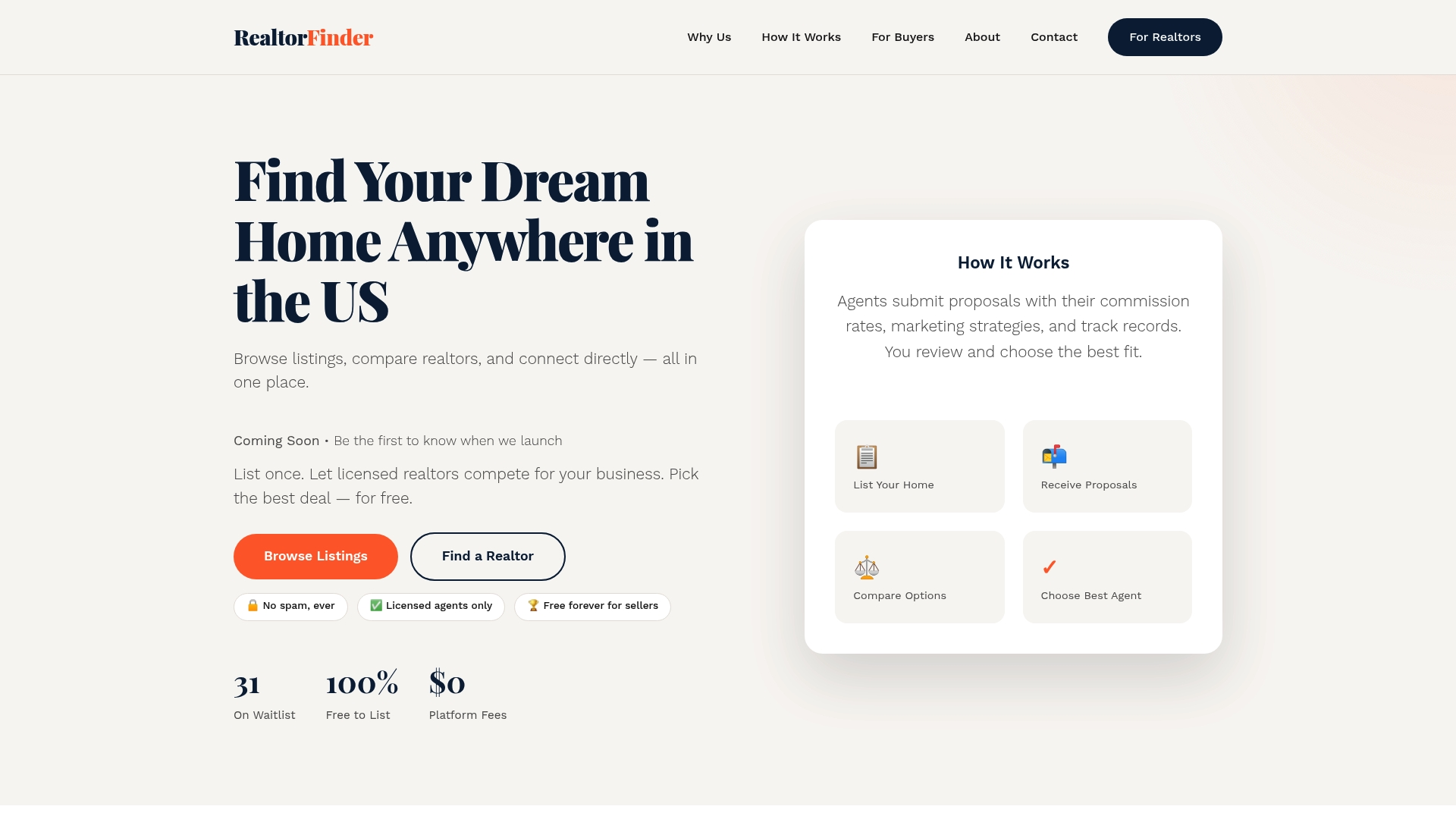
With Realtorfinder, you list your property once and licensed agents submit competitive proposals directly to you. Each proposal includes their marketing strategy, track record, and commission rate. You compare them side by side, on your terms, with no pressure. The transparent bidding process means agents compete on merit, and you benefit from commission rates well below the standard 6%. There are no upfront costs and no obligation. Visit Realtorfinder to post your property and start receiving agent proposals today. You can also explore local market activity by city to see which agents are most active in your area.
FAQ
What are the most important qualities to compare in realtors?
The most important realtor attributes to compare are local market expertise, years of experience, communication responsiveness, negotiation track record, and technology use. These qualities directly affect how fast your home sells and how much you net at closing.
How do I check a realtor’s experience before hiring them?
Ask for their annual transaction volume, list-to-sale price ratio, and average days on market for their listings. Top-performing agents have a median of 10+ years of experience and can provide these numbers immediately.
Why does communication style matter when choosing a realtor?
Communication quality predicts how smoothly your transaction will run. Agents who respond slowly during the selection phase tend to communicate poorly during the listing period, which can delay offers and create costly gaps in your sale process.
How can I tell if a realtor has strong negotiation skills?
Ask for a specific example of a negotiation where they improved a seller’s net proceeds or saved a deal from falling through. Vague or generic answers indicate reactive negotiation habits rather than a strategic approach.
What technology should a top realtor use to market my home?
Top agents use CRM systems for buyer database targeting, professional photography including drone footage, and targeted digital advertising on platforms like Facebook and Google. Ask every candidate to show you a recent listing’s marketing plan before you decide.
Recommended
Ready to sell smarter?
List your home free and let licensed realtors compete for your listing.
List Your Home Free